Causes and solutions from XINXIN WELDING
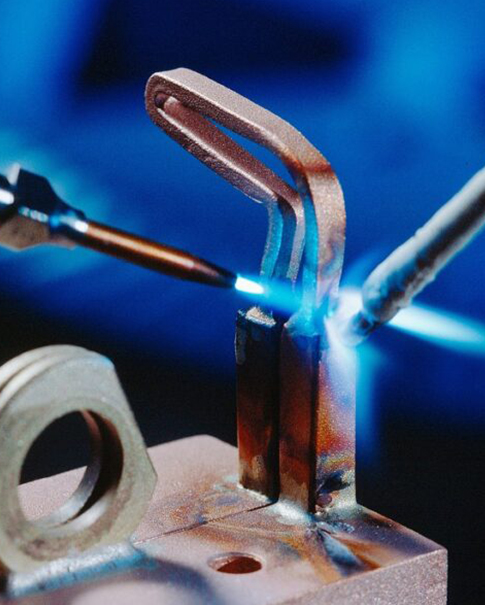
Brass welding rods are widely used in metal joining, fabrication, decorative metalwork, and repair. Poor wetting, porosity, cracks, and uneven joints can affect the finished result. Surface preparation, flux selection, heating technique, and joint design all influence joint quality.
TONGLING XINXIN WELDING MATERIALS CO., LTD. supplies brass welding rods and complementary brazing materials for distributors and industrial customers worldwide. This guide explains six common problems and practical ways to address them.
Problem: The molten filler forms small balls or rolls across the surface instead of spreading and bonding.
Possible causes: Oil, rust, oxides, or coatings remain on the joint surfaces. The workpiece may be too cool, while the flame melts the rod directly. Unsuitable or overheated flux can also prevent wetting.
Solutions: Clean the joint surfaces to expose clean metal. Select a flux compatible with the brass rod, base metal, and operating temperature. Heat the joint evenly, then introduce the rod when the workpiece can melt and wet the filler. Avoid continuously directing the flame at the rod. XINXIN WELDING can assist with rod and flux selection based on the application.
Problem: Small holes appear on the surface, or internal cavities become visible after grinding.
Possible causes: Oil, moisture, and contamination can introduce gas. Excessive heating may cause zinc to volatilize. Rapid filler addition can trap gas within the joint.
Solutions: Keep workpieces and rods clean and dry. Control heating time and flame position to prevent local overheating. Feed the rod steadily at the appropriate temperature. If flow is poor, check cleaning and flux before adding more heat. For components requiring leak-tight joints, perform the specified leak test; appearance alone cannot confirm sealing performance.
Problem: The joint initially looks sound but develops cracks during cooling or service.
Possible causes: Stress concentrations, an unsuitable filler and base metal combination, movement before solidification, uneven heating, or excessive fixture restraint may contribute.
Solutions: Review the crack location, joint design, materials, and heating procedure. Keep the assembly stable during solidification and use appropriate support. Verify joints exposed to vibration, fatigue, or substantial loads through trial joining and relevant mechanical testing. Share the base metal, joint configuration, and service conditions with XINXIN WELDING for product selection.
Problem: Dark deposits or heavy flux residue cover the joint and make finishing difficult.
Possible causes: Inadequate cleaning, prolonged heating, oxidation, excessive flux, or incomplete residue removal can affect the surface.
Solutions: Clean before joining, apply an appropriate amount of flux, and avoid prolonged heating. Once the workpiece has cooled sufficiently, remove residue according to the flux instructions. Brush, grind, or polish as required. For sculptures and decorative work, test joint colour and finishing on a sample before batch production.
Problem: The outside appears filled, but internal joint surfaces are not fully bonded.
Possible causes: The outside may be hot enough while the inside remains cool. Contaminated mating surfaces, unsuitable clearance, or premature filler addition can prevent filling.
Solutions: For capillary brazing, establish the appropriate clearance for the selected filler and process, and heat the joint evenly. For braze welding, check joint preparation, wetting, and the effective bonded area. A large external fillet does not prove internal joint quality. Confirm the process through section inspection or other suitable testing before batch production.
Problem: Thin tubes or sheets bend, collapse, or suffer local melting around the joint.
Possible causes: Concentrated heat, unsuitable rod diameter or feed rate, and repeated heating may damage thin sections. Components of different thicknesses require careful heat distribution.
Solutions: Choose rod diameter and flame size to suit workpiece thickness. Distribute heat carefully and avoid prolonged heating of thin sections. If filler does not spread, review cleaning, flux, and material compatibility before increasing heat. XINXIN WELDING HS221 rods are available in common diameters of 1.6, 2.0, 2.5, and 3.0 mm, with a standard length of 1,000 mm.
HS221 BRASS WELDING ROD is part of the XINXIN WELDING brass filler metal range. Applications include suitable steel component joining, decorative metalwork, sculpture fabrication, and repair, subject to process verification.
Typical chemical composition by weight: Cu 58.0–62.0%; Sn ≤1.0%; Si 0.1–0.5%; Mn ≤0.3%; Zn balance. Final composition and acceptance requirements are subject to the agreed technical specification and batch inspection report.
TONGLING XINXIN WELDING MATERIALS CO., LTD. supplies brass welding rods, silver brazing alloys, copper-phosphorus brazing alloys, aluminum joining materials, and brazing fluxes. Custom packaging and private-label options are available for distributors and industrial buyers.
Consistent joint quality begins with suitable filler selection, proper preparation, and controlled heating. Share your application requirements with XINXIN WELDING to discuss the right product for your process.
Website: https://www.superlionwelding.com/
Email: jasmine@xxhccn.com
Tel : +86 13705623213
Email : Jasmine@xxhccn.com
Wechat : +8613705623213
Whatsapp : +8613705623213
Address : 4077 Qifeng Road, Tongling, Anhui, China