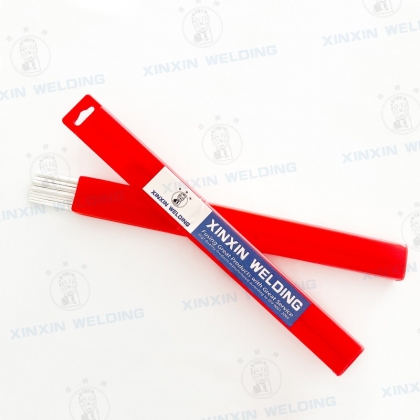
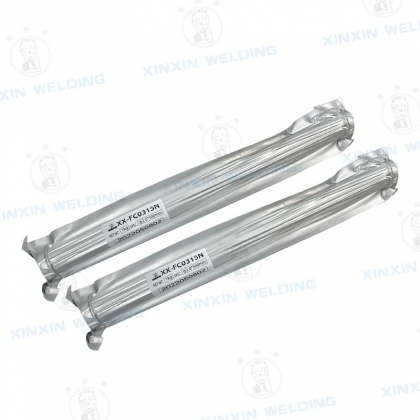
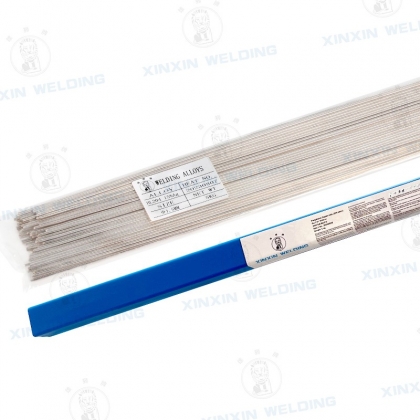
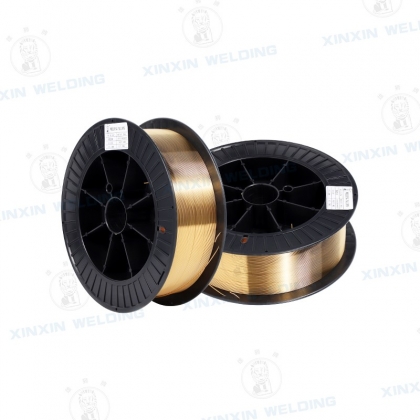
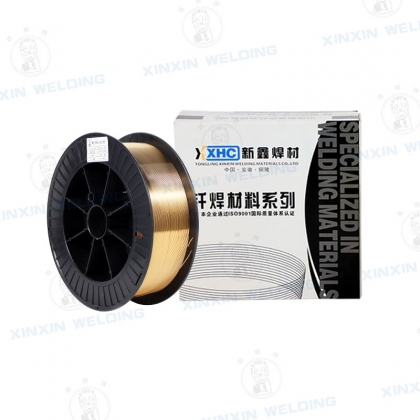
Brass Welding Rod
  • Copper Price Analysis: December 2025
    Copper Price Analysis: December 2025
    Executive Summary       As 2025 draws to a close, copper prices are exhibiting a phase of consolidation with a cautiously bullish bias. Trading within a defined range, the market is balancing persistent long-term structural tailwinds against near-term macroeconomic headwinds and seasonal softness. The prevailing price direction is being dictated by the ongoing tension between tangible supply-demand fundamentals and financial market sentiment. Current Price Context & Market Sentiment       Entering December, LME 3-month copper is hovering around **$9,800 - $10,200 per tonne**. This represents a stabilization following the volatility seen earlier in Q4. Market sentiment is cautiously optimistic but tempered by year-end risk reduction. Investors are largely positioned for the long-term energy transition story but remain acutely sensitive to data prints on global growth, particularly from China. The typical year-end liquidity drain and book-squaring by funds are contributing to slightly subdued trading volumes and range-bound action. Key Bullish Drivers       1. Tight Physical Supply:The market continues to grapple with structural underinvestment in major new mine projects. Persistent operational disruptions at key mines in Latin America and Africa, coupled with declining head grades at aging operations, have constrained concentrate supply. Global visible exchange inventories (LME, SHFE, COMEX) remain at historically low levels, providing a fundamental floor for prices.       2. The Energy Transition Megatrend:Demand from green sectors remains the core bullish narrative. Robust growth in electric vehicle (EV) production, grid expansion for renewables, and investments in related infrastructure (charging networks, wind/solar farms) continue to translate into incremental copper demand. This secular trend is viewed as non-negotiable, underpinning long-term price support.       3. Policy Support:Major economies continue to roll out fiscal packages targeting infrastructure and clean energy manufacturing. While implementation timelines vary, these commitments provide forward demand visibility and limit downside risk. Key Bearish Pressures & Risks       1. Macroeconomic Uncertainty:** The primary headwind remains the trajectory of major Western economies. While a soft landing scenario is gaining traction, high interest rates and restrictive monetary policy in the US and EU continue to suppress demand in traditional sectors like construction and conventional automotive. A stronger US Dollar, often a feature of year-end flows, also exerts pressure on dollar-denominated metals.       2. China's Demand Conundrum:Chinese demand remains the critical swing factor. While green sector demand is healthy, the ongoing property market downturn continues to be a significant drag on overall copper consumption. Government stimulus measures have provided stability...
    - December 22, 2025
  • Important Notice on Copper Prices
    Important Notice on Copper Prices
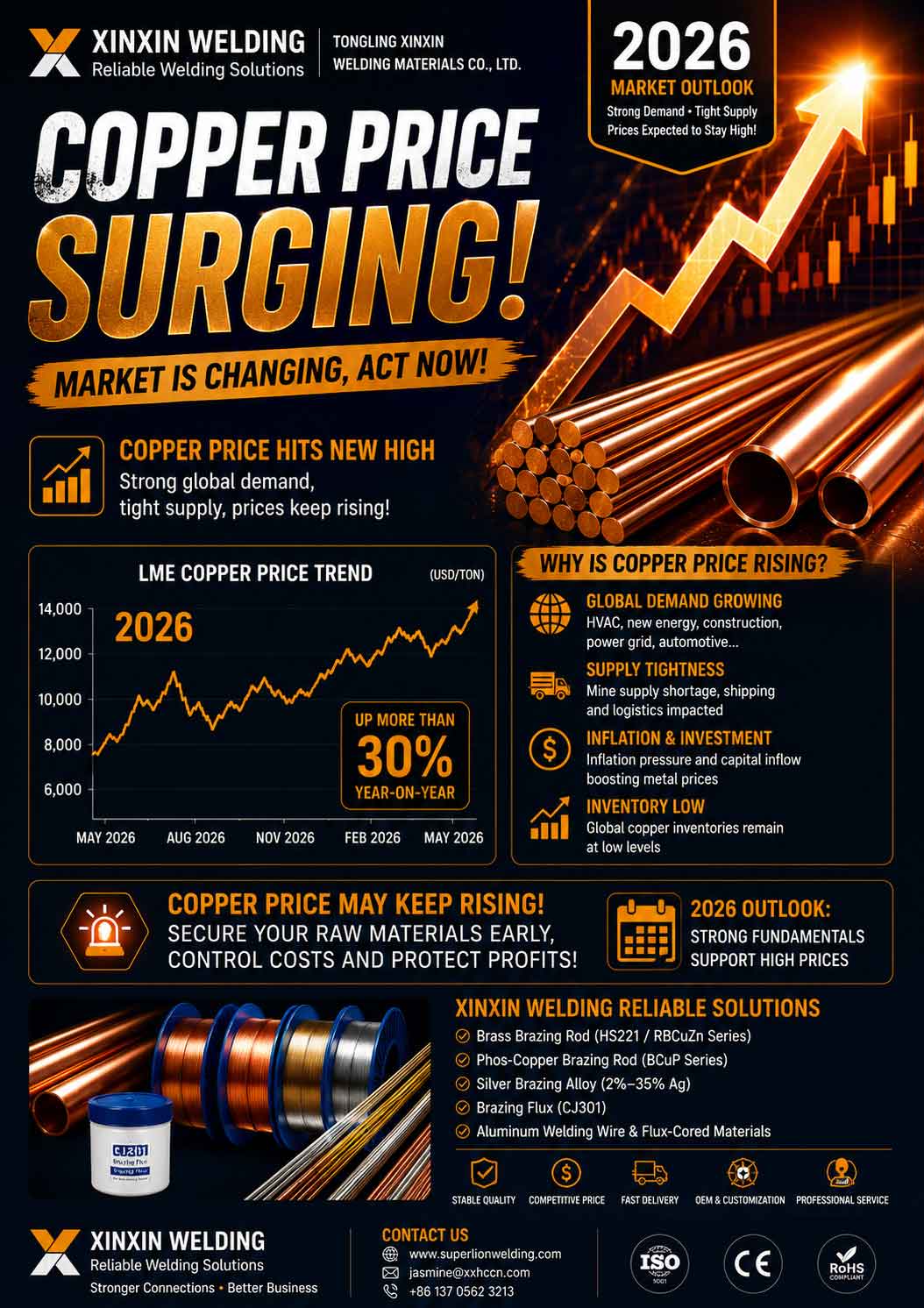
    Important Notice on Copper Prices           Dear customer, the copper price is still rising continuously every day and there is no sign of a decline. Please adjust your stock sales prices.          LME Copper prices increased today, December 8, 2025, closing at $11,620.5 per ton, a1.97% increase from the previous day's close of $11,400. The increase was driven bycontinued concerns about global supply shortages.        Previous day's close: $11.400        Today's close: $11.6120.5        Day's range: $11,620.5 -$11.645        Key driver: Fears of a global supply crunch are pushing prices higher.
    - December 08, 2025
  • Important Notice on Copper Prices
    Important Notice on Copper Prices
      Important Notice on Copper Prices           Dear customer, copper prices have skyrocketed. Please adjust your stock sales prices. It is expected that copper prices will not fall in the short term         LME Copper prices increased today, December 3, 2025, closing at $11,453 per ton, a3.06% increase from the previous day's close of $11,145. The increase was driven bycontinued concerns about global supply shortages.        Previous day's close: $11.145        Today's close: $11.453        Day's range: $11,180 -$11.485        Key driver: Fears of a global supply crunch are pushing prices higher. 
    - December 04, 2025
  • XINXIN QJ201 brazing flux
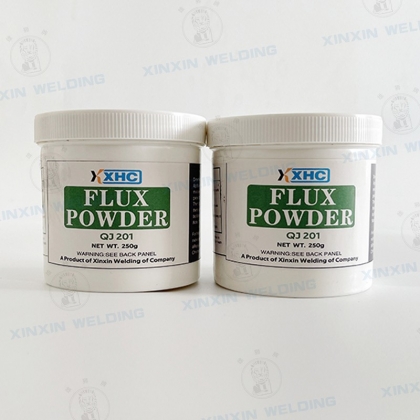
    XINXIN QJ201 brazing flux
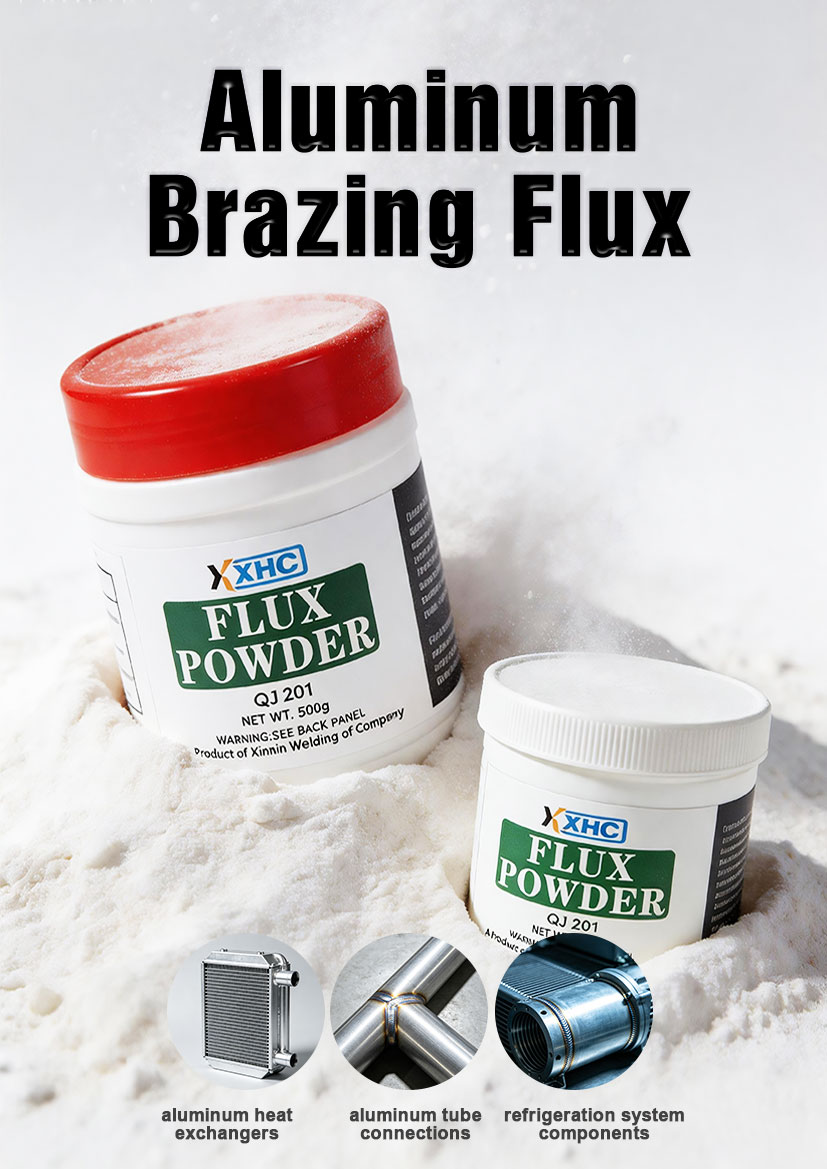
    XINXIN QJ201 brazing flux is an aluminum-fluoride-based flux (mainly KAlF₄) designed for non-corrosive, high-temperature brazing of aluminum and aluminum alloys.   Its principal uses are:      1. Oxide Removal & Wetting Aid – Chemically dissolves the tenacious Al₂O₃ film that forms on aluminum surfaces, allowing the filler alloy to wet and flow freely at 560–585 °C .       2. Oxidation Protection – Forms a thin molten layer that shields the joint from re-oxidation during heating, ensuring sound metallurgical bonding .       3. Process Versatility – Compatible with flame, furnace, induction, and automatic dispenser systems; supplied as a dry powder that can be brushed, dipped, or sprayed (after suspension in alcohol or water) .       4. Post-Braze Cleanliness – Leaves minimal, largely water-soluble residue, so components used in HVAC, automotive coolers, and electrical enclosures require only simple hot-water rinsing .       5. Industry Applications– Routinely used when brazing aluminum evaporators/condensers, intercoolers, battery cooling plates, and lightweight structural parts where corrosion resistance and joint integrity are critical .In short, QJ201 flux enables reliable, oxide-free, cosmetically clean joints in aluminum assemblies across automotive, refrigeration, and electronics industries.
    - November 21, 2025
  • 2025 Silver price every month
    2025 Silver price every month
    2025 Silver Price Outlook: Green Tech and Investment Demand in Focus       Analysts project a bullish yet volatile trajectory for silver prices in 2025, driven by two powerful forces.       The primary engine is robust industrial demand, particularly from the green energy sector. Silver's unparalleled conductivity is essential for solar panels and electric vehicles, creating a solid demand floor as global decarbonization efforts accelerate.       Simultaneously, its role as an inflation hedge and safe-haven asset will influence prices. Potential interest rate cuts by central banks could enhance silver's investment appeal, potentially amplifying upward price pressure.       However, persistent supply constraints and the metal's inherent volatility present significant risks. While the overall trend points higher, the path for silver prices in 2025 will be shaped by the interplay between this structural industrial demand and dynamic macroeconomic factors.
    - October 31, 2025
  • A Comprehensive Guide to Welding with Brass Welding Rods
    A Comprehensive Guide to Welding with Brass Welding Rods
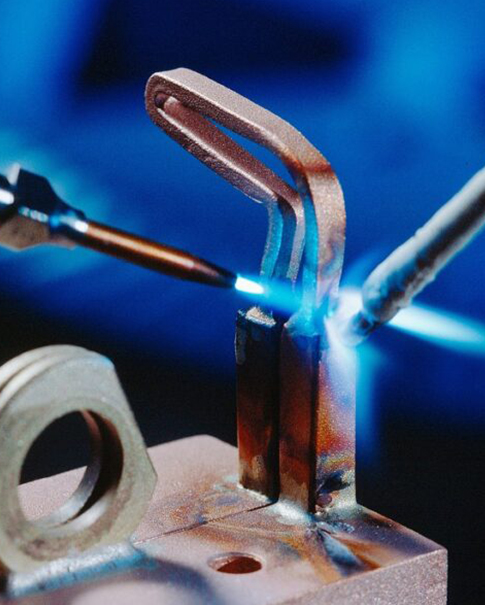
      A Comprehensive Guide to Welding with Brass Welding Rods       Welding with brass rods (often referred to as bronze rods) is technically a brazing process, not fusion welding. It's formally called Bronze Welding or Braze Welding. The base metal is heated, but not melted; the brass filler metal melts and bonds to the base metal through capillary action and adhesion.      This process is excellent for joining copper, brass, steel, cast iron, and dissimilar metals.   Key Principles: Base Metal: Heated but not melted. Filler Metal: Brass rod melts at a lower temperature than the base metal. Bond: Created by the molten brass alloy "wetting" and adhering to the prepared base metal surface.   Equipment and Materials You Will Need 1. Heat Source:     Oxy-Acetylene Torch: Most common and recommended. It provides a concentrated, hot flame with excellent control.     Oxy-Propane Torch: A good alternative, though the flame is slightly less hot.     TIG Welder (DCEN): Can be used for a very clean, precise weld. Requires a high-frequency start and good gas coverage. 2. Brass Welding Rods:     Common types are RBCuZn-A (Naval Brass) or RBCuZn-C (Low-Fuming Bronze). Low-fuming rods are preferred as they produce less zinc oxide fumes. 3. Flux:     Essential: Use a brazing flux specifically designed for copper-alloy rods.     Purpose: Prevents oxidation, helps the molten brass flow and "wet" the base metal. 4. Safety Gear:     Welding goggles/helmet with a shade 4-5 for gas welding.     Heat-resistant gloves and leather apron.     Ventilation Crucial. Welding brass produces zinc oxide fumes, which can cause metal fume fever. Work in a well-ventilated  area or use a fume extraction system. 5. Other Tools:     Wire brush (stainless steel)     Grinder or sandpaper     Clamps   Step-by-Step Welding Procedure (Using Oxy-Acetylene)   Step 1: Joint Preparation      Clean Thoroughly: All dirt, oil, paint, rust, and oxides must be removed from the joint area. Use a grinder, sandpaper, or a      wire brush. Cleanliness is critical for a strong bond.      Fit-Up: Ensure the parts fit together well with a proper gap (if needed). Clamp them securely in position. Step 2: Applying Flux      Coat the end of the brass rod with flux. You can heat the rod slightly and dip it into the flux canister, or use a brush to apply it.       A thin layer of flux can also be applied to the clean base metal joint area. Step 3: Setting Up the Torch       Use a neutral flame. An oxidizing flame (excess oxygen) will cause excessive oxidation and a poor weld. A carburizing flame (excess acetylene) can carbonize the joint.       To get a neutral flame: Light the torch with acetylene only, then slowly add oxy...
    - October 29, 2025
  • XINXIN WELDING: Delivering Excellence Worldwide
    XINXIN WELDING: Delivering Excellence Worldwide
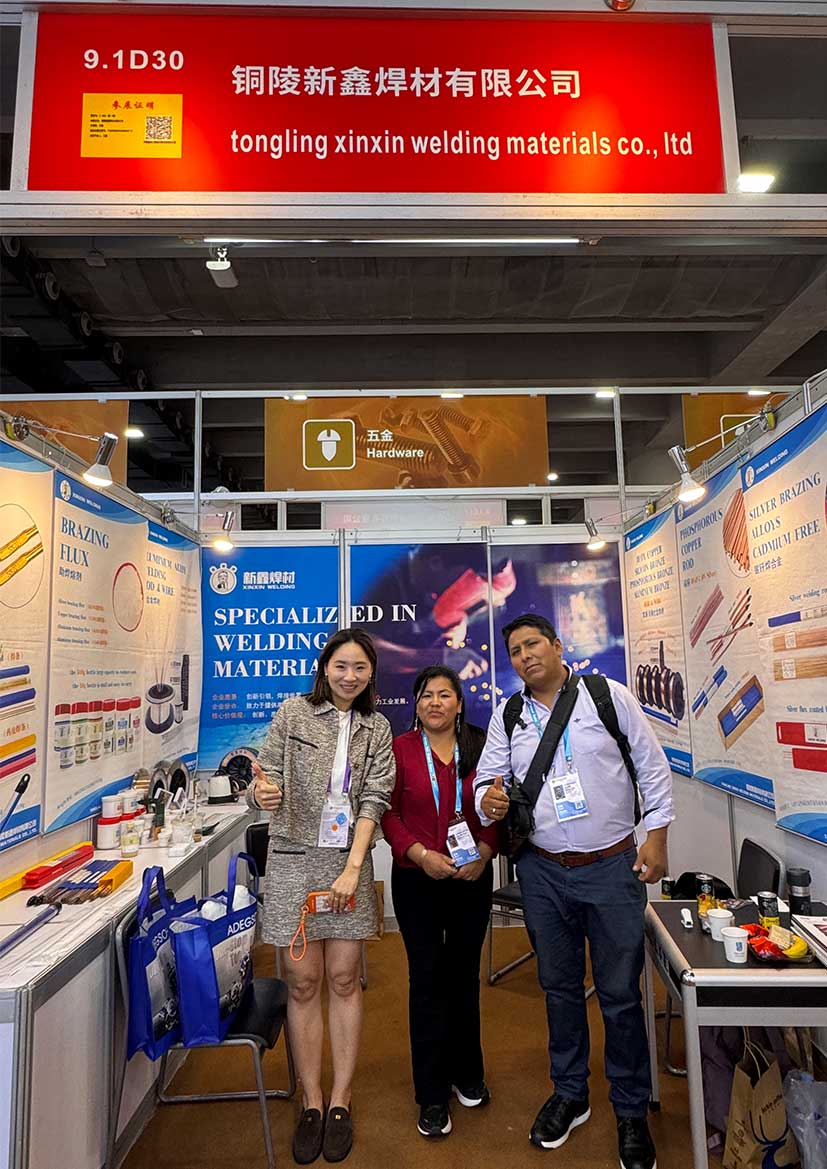
    At XINXIN WELDING, we take pride in producing high-quality welding materials that meet the diverse needs of industries across the globe. Our commitment to excellence, innovation, and reliability has made us a trusted name in the welding industry, with our products reaching customers in every corner of the world.   Today, we are excited to announce that another shipment of our premium welding materials is ready to set sail—this time, headed to South America. This container, filled with cutting-edge welding solutions, symbolizes our dedication to expanding our global footprint and strengthening our presence in international markets.   We extend our heartfelt gratitude to all our valued customers for their unwavering trust and support. Your partnership inspires us to continually raise the bar and deliver products that exceed expectations. Whether you are in South America, Asia, Europe, or beyond, we are honored to be your welding material provider of choice.   As we continue to grow and reach new horizons, we invite more customers to join the XINXIN WELDING family. Experience the quality, reliability, and performance that have made us a global leader in the welding industry. Together, let’s build a stronger, more connected future.   Thank you for choosing XINXIN WELDING—where quality meets the world.
    - October 25, 2025
  • why copper price increase in 2025 ?
    why copper price increase in 2025 ?
    In 2025, copper prices have risen sharply due to a combination of persistent supply shortages and robust demand from key sectors:   1. Supply disruptions**: Major mines, including Indonesia’s Grasberg, faced production halts (e.g., a mudslide), while projects in Chile and Peru were hit by labor strikes and regulatory delays. These issues cut the expected global production growth rate from 2.3 % to only 1.4 %, tightening the market .   2. Inventories at multi-year lows**: Exchange stockpiles—especially on the LME—fell to roughly 110 000 t, covering less than a day of global demand, amplifying price volatility when buyers scramble for metal .   3. Green-energy & AI-driven demand**: Accelerating solar, wind and EV roll-outs (EVs use 2–4× more copper than ICE vehicles) plus grid modernization and data-center construction are adding structural demand that outpaces GDP growth .   4. China’s renewed stimulus**: Despite a soft property sector, Beijing’s infrastructure push, renewable targets and AI investments revived Chinese consumption, which accounts for ~50 % of global demand .   5. Trade and geopolitical tensions**: A 50 % U.S. tariff on semi-finished copper products, wider U.S.–China trade frictions and front-loading of shipments distorted normal flows and added risk premium to prices .   6. U.S.-dollar and macro backdrop**: A weaker dollar (on anticipated Fed rate cuts) made dollar-priced copper cheaper for non-U.S. buyers, while global manufacturing rebounded faster than expected, lifting industrial off-take .   Together these factors produced a roughly 20 % price gain in 2025, with LME copper briefly touching $11 000 t—its highest level since mid-2024—and analysts projecting a 300 000 t global deficit for the year .
    - October 24, 2025
1 2 3

A total of 3 pages

Need Help? Chat with us

Leave A Message
If you are interested in our products and want to know more details,please leave a message here,we will reply you as soon as we can.
Submit

Home

Products

whatsapp

contact